
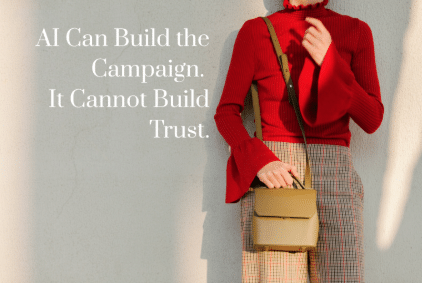
Artificial intelligence is rapidly reshaping how beauty and fashion brands create content, engage audiences, and market products. From AI-generated campaign imagery to virtual influencers and personalized shopping experiences, brands are experimenting with new ways to leverage emerging technology.
But while much of the conversation has focused on what AI can do, a more important question is emerging:
How do brands maintain consumer trust when audiences can no longer easily distinguish between what’s real and what’s AI-generated?
For beauty and fashion brands, the answer may determine who succeeds in the next era of marketing.
Where We Are Now: AI Has Infiltrated Beauty and Fashion Marketing
Over the past decade, consumers have come to expect disclosure around:
- Sponsored influencer partnerships
- Paid endorsements
- Retouched imagery
- Affiliate relationships
AI is quickly becoming the next frontier.
In July 2024, Mango launched what it called the first campaign generated entirely by artificial intelligence for its Teen line, using generative AI trained on real garment photography to place products on a fully synthetic model.
By March 2025, H&M had signed agreements with 30 real models to create licensed digital twins for use in selected marketing and social content, with consent and compensation frameworks built into the deal from day one.
In beauty and fashion, where the consumer’s relationship to a brand is deeply personal, transparency in business practices, especially regarding AI, is more important than ever.
What This Means for Your Brand Strategy Right Now
This is not an argument against using AI in your marketing. It is an argument for using it strategically and visibly, within a communications system built on credibility.
So, what should brands do to be transparent through their AI-backed campaigns?
- Build your disclosure posture before regulation requires it. When transparency is proactive, it becomes a brand story. When it is reactive, it becomes a legal response. The narrative value of those two positions is not comparable.
- Audit your consent, rights, and labeling frameworks before production begins. The legal and reputational cost of retroactive correction is always higher.
- Use AI as an accelerant inside a human-led creative and communications strategy. The human strategic layer is what protects brand voice, maintains editorial consistency, and builds the earned credibility that no algorithm can manufacture.
At RED PR, the communications framework we call The EARNED Method is built around this principle: visibility compounds over time because it is grounded in credibility, not chased through shortcuts. AI is a powerful tool inside that system, but it is not a substitute for the system itself.
The brands that win will not be the ones deploying the most AI. They will be the ones deploying it with the most transparency. To learn more, contact us at RED@RED-PR.com.